Friday, 19 October 2007

Ballet issues-a Corfiot's point of view

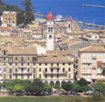
The old castle.

This is the entrance.


Mourayia place, on the way to the old port of the town.

A romantic road in the old town.


Garitsa bay, the promenade.


Today, I display an extract from Aggelina's blog. Aggelina is a ballet dancer and a student at the Open University. She is young and gifted and I think you would like to know how she works.


"Another day spent struggling with the kids in the dance studios.
One could divide the ballet education in 8 levels. Provided a child starts the proper training at the age of 10, it has the potential to become a professional dancer at the age of 18. Academies usually prepare the children for the first level, with pre-ballet courses taken one or two years before the age of 10.

Right now I teach “babies” around 5 years old the basics along with creative dance games. This is a very fun process and although I really hated being with children at first, now I have come to enjoy it tremendously. You can see the fascination and pure joy in their eyes when they dance. I have also come to the conclusion that they are much more able of learning and performing complex combinations than what I was taught during my education. The kids are doing fine and will do much better in the future.

I also have a level 1 class to teach. They have had some elementary training in ballet but still lack some very fundamental elements. The good thing with them is that they do listen to me, and I am able to reason with them in order to lead them to the result I wish. Kids at the age of 10-12 are very intelligent.

The problem is with a strange class I took over. It’s not really a baby-class but its also not 1st level. They have been described to me as something in between, but they cannot do anything. I struggle with them throughout the hour to teach the discipline. To teach them that during this one hour that we train, they have to focus and give 100% of their attention and strength to whatever we practice. It is a very arduous process. Some children lack self-confidence and are very sensitive. I might appear somewhat frightening to them. Others try but are unable to co-ordinate their body and their thoughts.

Ballet is about discipline. It might look ethereal but the whole truth behind it is one of great (self)discipline and concentration. Personally I hate amateur schools of ballet, because they commercialize dance and do not teach the discipline and abilities required to be a dancer. And yet not every child wants to pursue the career of a ballerina. I remember when I was about their age, my teachers where much more strict and abrupt. They were older than me and required extreme discipline in class. They achieved that through fear. They managed to spread a cloud of fear for them among the children. Maybe due to my early training in discipline, I have been able to maintain and hold this discipline throughout all my years of classical training. The importance of it is vital and yet I am not “willing” (though I might be able) to “force” this among kids. I am currently in search of a way to discipline them through reason and common sense. I believe in their intelligence and as soon they start gaining confidence in their abilities, I am sure they will adapt.

It also strikes me as sad, the fact that some kids have so low self-esteem. I do not know the roots of this problem but as a ballet teacher, I would like to teach them the confidence, to present themselves in front of an audience, either dancing or talking in a certain and beautiful manner. Shouldn’t that be a task of the parents or school teachers to perform? It is something in the traditional Greek families that over-protects children to the point of them not being able to do things on their own and trust themselves. It could also be a problem at schools, when the teachers do not treat every child differently according to each individuality and personality. I have always felt inferior as a child, even though my abilities were above normal. That was because my environment did not show the proper trust and belief in me, the proper recognition of my abilities. Kids are not just kids… they can start and learn to achieve great things. And this is going to be my goal.

Learn more by visiting Aggelina at http://viruswitch.com/blog

Saturday, 13 October 2007

Cultural News


CHESS


Do you play chess?


Yesterday was the last day of the chess tournament in Corfu town. It took place at the conference centre at Faliraki, a romantic place by the sea with view to Vido island.
The chess festival was organised by the local authorities in cooperation with chess related parties.

Chess games took place on a daily basis from 15.00 to 22.00 in the evening. It lasted for 10 days and involved the following:


An International open tournament
A Grant Maitre tournament
A touristic tournament and
a Rapid tournament.


More information and pictures from Aggelina's blog (in Greek) at
http://skaki.blogspot.com/


and from Bill's site at
http://www.aggelia-online.com/


BOOKS

The new book titled 'I won't Cry' by the Corfiot author Liana Vrahlioti is going to be presented at the library of Lefkimi this Saturday, 13th of October at 7 pm.


DANCING


The dance school of Jenny Theotoki will perform tonight at 20:30 at the Municipal Theatre of Corfu. The funds will be contributed to Floga organization that cares for children with cancer.
Ticket price: 8 euros.


CINEMA


At ORFEAS cinema tonight


the film Hairspray


with John Travolta, Michel Pheifer, Christofer Waken.


An American movie telling the story of Tracy, a fat girl, who tries to take part in the Corny Collins Show. The story is set in 1962, and the director is Adam Sankman.

Sunday, 30 September 2007

Nuts-the special ones!


Pistachio:
A Greek bio product


Did you know that pistachio grows on a Greek island? And that is the best quality of all other nuts since it is a bio product?

Aegina island produces pistachio, the most popular nut in Greece (and the most expensive and tastier) that has got a special unique taste. It is also a bio product!

Looking back to the 19th century, these special trees, pistachio trees, were not planted in Greece. Only in Aegina island this special tree finds the moisture it needs to grow. The soil is composed of clay, the substance clay pots are made of, so the water runs through it. The soil remains dry despite the amount of water found and that is the reason this nut is so delicious!

What affects the taste of the nut?
1. It’s proximity to the sea.
2. The dry environment.
3. The small size of the trees.
4. The low level of humidity-even at night.
5. The composure of the soil.

The crop is ready in August. They gather the nuts by spreading nets under the trees and shaking the branches with a stick. Then, a machine sorts out the nuts peels them and discards the bad ones. Next, the nuts are washed and are spread under the sun for 3-4 days to dry. Some farmers use a machine to dry them. When ready, they are put into bags and placed into the freezer for 3 days to kill the insects that may have remained alive. In there they can be preserved for up to 2 years. This bio product has no chemicals-just sea salt and real lemon juice on it!

Where can you find pistachio in Corfu?

Certainly in all big stores! Supermarkets have many varieties as well as coffee shops.
Try Demetra markets or Sconto markets all over the island.


For more information go to Aegina

http://www.greektravel.com/greekislands/aegina/

Sunday, 23 September 2007

The square


Here is the square, the peristilion and the chestnut trees.


A stroll at the square


Strolling along the upper square of Corfu can be a unique experience. Just take some time to look around, to admire the view at Garitsa bay, and further on, the old castle. Everything around is green and relaxing.

Take a look at Peristilion, an ancient water tank, which is at the top end of the square. It used to be accessible but since the people started ruining it, the Mayor built an iron fence around it to preserve it. When I was little I used to play there with my friends. We played hide and seek behind the columns and wondered what was inside the locked door. They said it was a huge well with water. Then some kids started drawing on the wall and so the damage started. The restoration took place last year and now it is one of the best well-preserved sights in town.

The square is full of chestnut trees, acacias and tilia/lime trees. Chestnut trees (Kastanies in Greek) drop wild chestnuts (kastana) on the ground and kids pick them up. I also loved picking up chestnuts and carrying them home. I still have one of them which is very old and is hanging from a chain. September is the month for mature chestnuts.

Tilia flowers bloom in spring and their aroma is so strong that it spreads all over the square. The flowers come out in groups and are yellowish. Tilia is a herb that when dried and drank, relaxes the mind. In Greek we call it TILIO

Saturday, 15 September 2007

Wine!


Do you drink wine?

Learn about it.

Just a little bit of everything you need to know about wine, how they taste it and how you can tell the wine you drink is good!

Myths and Truth

Don’t drink wine on an empty stomach. You get drunk fast!

---Did you know that olive oil helps? You don't get drunk that fast if you eat a nice salad with olive oil dressing.

---Take care! Too much wine causes dehydration.

The wine ‘over the counter’ is never as good as the bottled one.

---No one controls unbottled wine. There is no product name and no responsibility!

---Bottled wine is safer.

If you mix different kinds of wine you get drunk.

---Not true. It depends on the amount of the alcohol you drink. But if you mix different products such as wine (grapes) and vodka (potato), you get drunk.

TIPS

How to choose the right wine

When does a bottle of wine is not drinkable?

1. Examine the cork: problems at the cork result in a characteristic bad smell. That is not dangerous for your health though.

2. Acidosis: If air penetrates inside, the wine gets spoilt.

Some wines become better when they are left to mature in barrels or in their bottles. Most wines need 2 to 4 years to mature.

TASTING WINE

Get a glass of wine. Follow the 3 steps below:

Look at it.

Smell it.

Taste it.

Ask yourself:

  1. Is it clear enough to see through it?
  2. Is the aroma pleasant?
  3. Is the taste sweet, bitter or dry?

RETSINA

This Greek traditional wine, dates back to 3000 years, to Ancient Greeks!


This is a unique Greek product. To make it, they add to the white wine retina from pine trees.

WINE SELECTION

www.oinotrapeza.gr

South Greece

Petritis Chysohoou, Naousa

Simeonidis Wines

www.simeonidiswines.gr

Kavala-olive grove village

Email: simwines@otenet.gr

Thursday, 6 September 2007

Mount of God


Mount of God, Pandokrator for the local people, is the tallest peak on the green island of Kerkyra (Corfu for the non Greek), and is situated in the northern part of the Ionian Sea , between the Greek mainland and Albania and Italy. The mountain was named after God, Who is pandokrator, that is to say ,He governs everything.

The myth says that the hospitable Pheakes lived on the island long ago and their kind king Alkinoos had an only daughter, Nafsica, who first met Ulysses, the king of Ithaca, shipwrecked on a beach of the island . There is still his petrified ship to see at Paleokastritsa, a popular area on the west side of Corfu.

The northern part of the island where Pandokrator lies is the richest in green. Mount Of God is 918 meters high and has got a monastery on top dedicated to God the Savior. From up there the visitor can admire a wonderful view to all directions , let alone the marvellous dawn and sunset.

Climbing the mount is easy, as there are roads and paths right to the top and a drive by bike , motor bike or car is feasible. There are numerous villages scattered among the green on the way up and there are vast olive groves in every direction. The scenery is adorned by an abundance of tree variety as well. You can see tall cypress trees, pine trees, oaks and orchards and vineyards in between. There you can feel the smell of wild herbs and flowers lingering in the air.

However, the road upwards is winding and narrow so the traveler should be careful when driving. There are many routes one can follow, depending on the area they want to explore. For walkers, the route, Ipsos, Ayios Markos, Korakiana, Dassia, and back to Ipsos is the most popular and the easiest. Up there you can see nature in its full glory , any time of the year.

One of the most picturesque villages , literary perched on the side of the mount is Ayios Markos. The houses are built on the very edge of the narrow road and overlook vast olive groves that reach the beach of Ipsos beyond. To reach the beach from Ayios Markos you need only 5 to 10 minutes by car or 30 mins brisk walking.

A big village on the side of the mountain is Korakiana, Crow Nest in English. There used to be lots of crows in this village years ago, but nowadays there is a big variety of singing birds around, offering the people a unique melody all the year round.
Korakiana is the perfect village to rent a house or a room or even stay there for good. Some foreign visitors have recently bought real estate at low prices and have built their own houses on the mount. It is worth the money and time spent on a housing project over there if one likes nature and especially the green.

Starting from village Korakiana towards Socraki (top) the route is climbing and has got sharp hairpin bends but it is worth the drive. The scenery below is breathtaking. On the first bend upwards the traveler can visit the tiny old chapel of Ayios Isidoros and can light a candle. The chapel has got a big bell that rings only on the Saint’s name day and in emergencies such as fires. It was built a very long time ago to honor the Saint for saving a cart driver’s life . His cart had fallen over the path but the man was alive. This is an old story the local people still tell one another.

Mount of God is definitely a place for nature lovers and adventure seekers as it combines everything, from healthy living on mount lodgings to extensive nightlife on the beach bars and discos. Fun and sports , such as climbing and sea sports , tasty local cuisine and local drinks are some of the most popular attractions.