Friday, 3 July 2009

Water color display at Anemomylos


Yesterday I had the opportunity of visiting Anemomylos area in Corfu. Anemomylos took its name from the windmill that used to be there in old days. Nowadays, a reproduction of the original mill has been constructed that houses art exhibitions during the summer.

The current art exhibition of the well known Corfiot painter G. Zervos started on Wednesday 1st of July and was organized by the cultural and environmental group of the area. The water color exhibition will last till the 15th of July.

Opening hours:


10:00 to 12:00 in the morning
and
7:30 to 10:00 in the evening.


Mr Zervos has organized 60 exhibitions so far, both in Corfu and other places in Greece, and specializes in water color. However, he also paints in oil color and the visitors now can admire his unique color pallet in that medium too. All of his pictures depict well known Corfiot landscapes that are so characteristic.

His paintings show his apparent sensitivity in color and construction (he is a civil engineer)and the visitors will be fascinated by the variety of hues that he uses to depict Corfiot nature. The buildings he paints are in great detail and look like photographs. His price list is decent and caters to all art lovers.

If you love art and would like to get a painting to remind you of Corfu island, don't miss this exhibition!

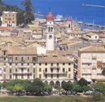
(Here is the view from Anemomylos)

Sunday, 28 June 2009

Art Exhibition

References (Anafores)


Anafores is the title of the art exhibition taking place at the Public Library of the old castle. The artist is the Corfiot painter Demetra Kleronomou.


The paintings will be displayed at the Library till the 7th July.


Public can visit the exhibition on


Monday and Wednesday 12.30 to 19.00


Tuesday, Thursday and Friday 8.30 to 2.30


About the artist


Demetra Kleronomou was born in Karousades village in Corfu and has been drawing from an early age. Her first studies began in 1999 when she was tutored by the artist Marco Bano and then continued her studies at the Art School of Corfu. Her teachers were Melina Grammenou, Spiros Alamanos and the sculptor Eva Karidi.

Demetra has taken part in many group exhibitions in Corfu and other Greek cities. She is a member of EIKE, UNESCO Piraeus and Island and former member of the Ionian Theatre.


Tuesday, 23 June 2009

Labatines


Labatines (small fires)

Tonight Corfiots can attend the custom of Labatines (small fires) in two areas of the town: Benitses and Mandouki.

This custom takes place on the eve of Saint John Labataris. At Benitses village, the women’s association Athena organizes an event at 9:00, during which two fires will get lit in the square of the village. There is also going to be live music, dancing and treats!

At Mandouki area the cultural association of Mandouki people organizes a music event at the bus terminal to celebrate Saint John. In this event will take part the kids of the handicraft workshop of the association.

According to the women’s association Athena, this special custom calls all the residents of the island to gather at a cross road during sunset to light labatines. In old days they used to make three stacks of hay and each household brought along their May flower ring to burn. The fires had to be three and always located on a three-way crossroad. When the fires burnt, the young people used to jump over the fire one by one, and they had to jump three times each over the fire. It is a great fun to watch and participate in this event!


Saturday, 13 June 2009

Garitsa area, Corfu

One of the most picturesque areas in Corfu town is Garitsa area. It is a green spot starting from Alexandras Avenue to Anemomylos place at the end of Garitsa bay.


The main church in this area is the church of Iasonos and Sosipatrou, which has old beautiful murals inside and a special architecture. It is certainly a sight worth seeing. Many ceremonies still take place at this church which is very popular among the residents.


The bay of Garitsa has always been the favorite promenade for the Corfiots who stroll along the seafront almost all the year round. Summer evenings are especially suitable for a stroll at Garitsa as the sea breeze is cooling and welcome. The tavernas along the inner side of the bay, in the green park, offer a restful and delicious evening out from spring to autumn.

Sunday, 7 June 2009

I Live in Corfu!


Meet the animals, insects and plants living on the island.

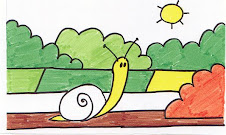
SNAILS

‘Hi,

My name is Snail, but my Greek name is Saligari, or Bobolas in plain Corfiot language!

In my family we are in a variety of colors; the most common is brown with black stripes. White snails are quite common in fields with eatable plants such as lettuces, cabbages and broccoli (the green kind of cauliflower). I love the rain and I usually come out for a stroll after a nice heavy storm or a drizzle... I have to search for food, you see. That’s the time farmers really dislike me. Why? Read on to find out!

What do I eat?

Leaves; almost any kind of fresh green leaves will do. I am not too selective but I prefer those kinds human beings eat as they are the tastier. My worst time is when I go out to look for food because I am an easy prey. Birds catch me, you know, as I am part of the food chain. People eat me, too, but not very often since some of them think I am too slippery and creepy for their taste (I have to become more disgusting if I want to survive, but there are still those who find me cute; can you believe it? CUTE! How can a snail look cute?)

Well, I am an artifact too. My shell is a piece of art; people all over the world try to draw and paint my shell, so I am quite famous for my decorative designs. You can see lots of different shells at the Benitses Shell Museum in Corfu. http://www.benitses.org/shellmuseum/index.htm

If you are online, you can learn more about my family here

http://www.geocities.com/sseagraves/allaboutsnails.htm

Now, would you like to read a story about me and my family?

Get the book titled The White Snail from a Corfiot bookshop or kiosk. Or visit my online address to order a signed copy at

http://toasprosaligari.blogspot.com

Sunday, 31 May 2009

Corfu and Venice: a cultural journey into the past


The small island of Corfu has always been considered a gem in Ionian Sea. The abundant green and its beautiful beaches used to attract people from all over the world, let alone its neighboring countries. So, Italian people could not underestimate Corfu’s beauty and strategic position, and claimed the island for the first time in the 12th century. The first Venetian occupation took place in 1205, and it was during that time that a lot of significant changes occurred on the island.

The Venetian culture

The Venetians cared for the olive oil production, so during their occupation Corfu olive groves started to expand. Nowadays the whole island is still covered with olive trees. The Venetian culture affected greatly the lifestyle of the Corfiots who were at that time privileged to live in a higher level cultural background, in contrast with the other Greeks on the mainland who were under the Ottoman occupation. The establishment of the Ionian Academy is an example of the cultural influence from the west. The Academy, which was destroyed in the years to come, has been fully rebuilt and houses now a part of the Ionian University.

The Old Fortress

The Old Fortress is an excellent example of the fortification of the island that dates back to the Venetian times. This fortress has got a 60- meter bridge that links the castle to the square. Contra Fossa canal flows underneath and is currently used as a harbour for boats. At the entrance of the fortress there is the statue of Schulenburg who was a defender against the Turks. The fortress was first fortified by the Byzantines but the Venetians built complex tunnels and galleries to make it stronger. Inside the castle the visitor can see a prison building, the English Officers’ Quarters, the Barracks, the English Hospital and the chapel of Ayios Georgios, which is in Dorian style and was built by the English in 1840. From the top of the old fortress the traveler can see a panoramic view of Corfu town. The most picturesque part is that of the old town with the red tiled roofs and the traditional buildings.

The New Fortress

The Venetians also built the New Fortress which is on the North West side of Corfu town overlooking the old harbour. The two big gates of the New Fortress are still intact! On one gate visitors can see a winged lion. This is the Venetian emblem of Saint Marco. This fortress was completed in the 15th century.

The Esplanade

Another Venetian aspect that is still prevalent in Corfu town is the Esplanade (Spianada for the Corfiots) that is the heart of Corfu town. Spianada is next to the lower square of Corfu, and this area is the center for all local festivities and major social events. The top part of Spianada is at Liston place, which is called the small Paris, since it was built by the French during the French occupation of the island and its architecture is similar to the one found in Paris. The unique lamps at Liston were made by the Venetians and are an excellent sample of the art of that period.

More cultural influence

It is obvious that the Venetians influenced a lot the local architecture as well as all the other aspects of local life. Education was promoted and many institutions were set up, such as the music schools which are still running all over the island. Corfu has got 12 bands today! Celebrations and cultural events still include Italian aspects and the local language has been greatly affected too. The older generations still speak Italian and many modern residents still use some words that are of Italian origin. For example, the word ‘alibreto’ is used to describe the half closed window shutters. Time changes though, and I wonder if the new Corfiot generations will maintain that part of their tradition in the years to come!

Tuesday, 12 May 2009

Meet Vasilis Sgouros


Interview with Vasilis Sgouros, the owner of PhysioPraxis center in Corfu

Vasilis Sgouros has been working in this field for over 30 years.


Q: Welcome to our page Mr.Sgouros. We are delighted to have you here today. Fist of all, we would like to know about PhysioPraxis. What exactly is this center?

A: This is a center of Physiotherapy and Recovery

Q: What does this center include? What kinds of programs are available and who do they cater to?

A: The center includes the following programs:

Athletic Recovery
Exercise and Diet
Exercise and right posture for children and adults
Exercise special for facing chronic problems such as osteoporosis, arthritis and other
Ergonomics

These programs cater to almost everybody, young and old.

Q: Tell us about the first program, Athletic Recovery. What is it about and who is it aimed at?

A: Athletic Recovery is for those who do sports. Many times specific problems arise, so there is need for physiotherapy. Of course, each case is different and depends on various factors. The program we offer suits the individual’s specific needs.

Q: How about the second program, Exercise and Diet. Can you tell us a few things about that?

A: In co operation with a doctor who teaches metabolism in the University of Athens, I teach the right diet and exercise which is individualized. There is a personal trainer for each patient so as to get the most of this program.

Q: The next program is Exercise and right posture for children and adults. Whatexactly is that?

A: This one caters to those who have a problem with their body such as a dysplasia of the spine, foot problems such as platypodia etc. We offer special exercises to help both kids and adults.

Q: What can you tell us about the Exercise program for facing chronic problems?

A: This program is for those who have a chronic problem of their muscle and skeleton system. People suffering from osteoporosis and arthritis will find this program highly beneficial.

Q: The last one is Ergonomics. What is that?

A: Ergonomics is the relationship of our body with any special physical activity, such as housework, our job, using computers, watching TV, using the car, gardening and anything else we do every day. We give advice to ensure the right use of our body in relation with its activity. This means you will learn how to use your body, when you do your work the right way and so on.

It is important for the people to know this so as to get tired less and achieve more; Also they can get more energy and cause less damage to their muscles and skeleton system.


Q: Where is this center located? How can we contact you?

A: It is at Vraila Armeni 6, Tennis area. Our telephone is 26610 25637
Our email is Sgurosb@otenet.gr

Thank you for being with us!